
Short Sermons to Little Children (1848)
There is a God
He that cometh to God must believe that he is.
Heb. xi. 6.
I believe there is a God, but I do not believe so because I ever saw him. “No man hath seen God at any time.” God says, “No man shall see me and live.” But we may all believe in some things, which we never saw. We never saw the wind, and yet we know it blows. Like the wind, God may exist, though not seen by us. We all believe that many men are now alive, whom we never saw, but whose works we have seen, or whose fame we have heard of. Therefore, it is as foolish as it is wicked to doubt whether there be a God, simply because we never saw him. But I will tell you why I believe there is a God.
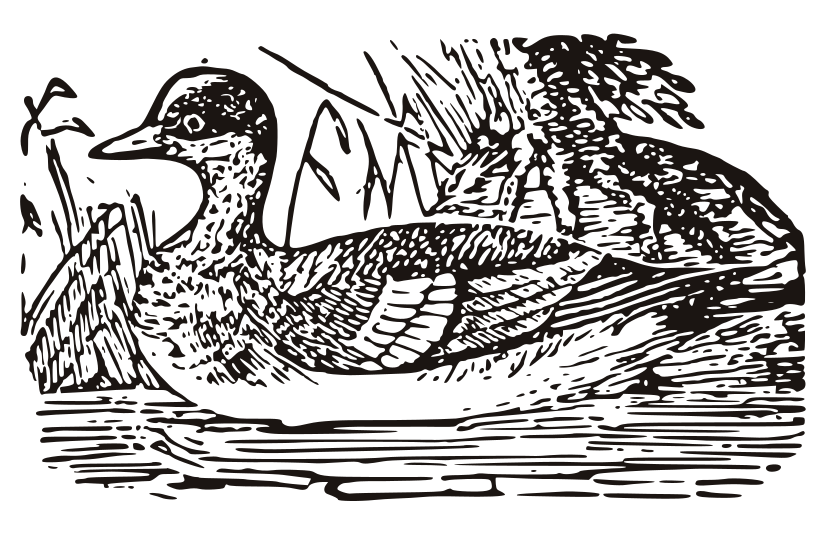
Not long ago, I went with four little children into a watchmaker’s shop, and there a man brought out a little box, and put a key into a small hole in the side of it, and wound it up. He then set down the box, and touched a spring, and the top flew open, and a little bird, not as large as a humming bird, hopped out, and flapped its wings, and sang, or seemed to sing, a pretty tune. When it had sung its tune, it hopped down into the box and we saw it no more. It was made of brass and silver and gold. It was very small and very beautiful. The little boys and girls that were with me were much pleased. Charles said, “How pretty it is.” James said, “How it sings.” Mary said, “I wish I had it. I would give a dollar for it.” She was told the price of it was six hundred dollars. Jane asked, “Who made it?” Mr. Smith, the watchmaker, told her it was made by a man in Geneva, in Switzerland. We all left the store in good spirits and went out to a grove. Here were many living birds. Some were black, some were blue, some were red, some were yellow, some were green, and many were speckled. One had a white body, and red head, and black wings. One was black all over except the wings, which were of the colour of gold. Every one of them could hop from branch to branch, and from tree to tree. They could build nests, and find food for themselves and for their young ones. They could all make some noise. The notes of most of them were very sweet. One of them could mock all the rest. He had the notes of the quail, the jay, the blue-bird, the robin, the cat-bird, and a dozen others. He is called the mocking-bird. The sun shone clearly, and a little rain the night before had made the air cool and pleasant. So we all walked through the grove, and found some pretty flowers. We then came to a cool spring, and took a drink of water. Near the spring was a large rock, and on it we sat down to rest. “Now, is not this fine?” said I. “Yes, yes, yes, yes,” was heard from all. Just then two or three birds near us sang sweetly, as if to please us. I thought it was a good time to talk. So I said, “If a man in Geneva made the bird in the box, how came all the living birds here? Did they make themselves?” Charles said, “How could they make themselves? I saw in my book the other day, that ‘nothing can make nothing.’” “Well,” said I, “did the man in Geneva make them?” Jane answered, “No! he never saw them. He could not make such birds as these. The bird in the box is the best he could make, and it cannot lay eggs, and hatch young ones, and fly about, and build nests, and eat cherries.” I then said, “Did they just grow without any one making them?” Charles replied, “How could they?” Mary said, “I can tell you how they came here. God made them. No man could make them. None could make them but God himself. I know there is a God, because there are so many pretty birds.”
I added, “You are all right, my children. There is a God. If these little birds were put under the water, they would all die, yet there are thousands of living things in the water, that would die if they were brought out of it. God has fitted the birds to the air, and the fishes to the sea. He has made every thing good, and we ought to believe that he is. His works are all around us. They are many, and great, and wise. Let us never doubt that there is a God.”
Remarks
If there is a God, we ought to believe in him, and think of him. We ought to love him, and fear him, and obey him, and not sin against him. We ought also to trust in him. Little birds do his will, and praise him in their way. We ought to praise him in our pretty hymns, and in our hearts. And we ought to pray to him, as he has taught us:
“Our Father which art in heaven, Hallowed be thy name. Thy kingdom come. Thy will be done in earth, as it is in heaven. Give us this day our daily bread. And forgive us our debts, as we forgive our debtors. And lead us not into temptation, but deliver us from evil: For thine is the kingdom, and the power, and the glory, for ever.” Amen.
From Short Sermons to Little Children (1848). Page numbers refer to the 1848 American Sunday-School Union printing. Source: Internet Archive, shortsermonstoli00plum.